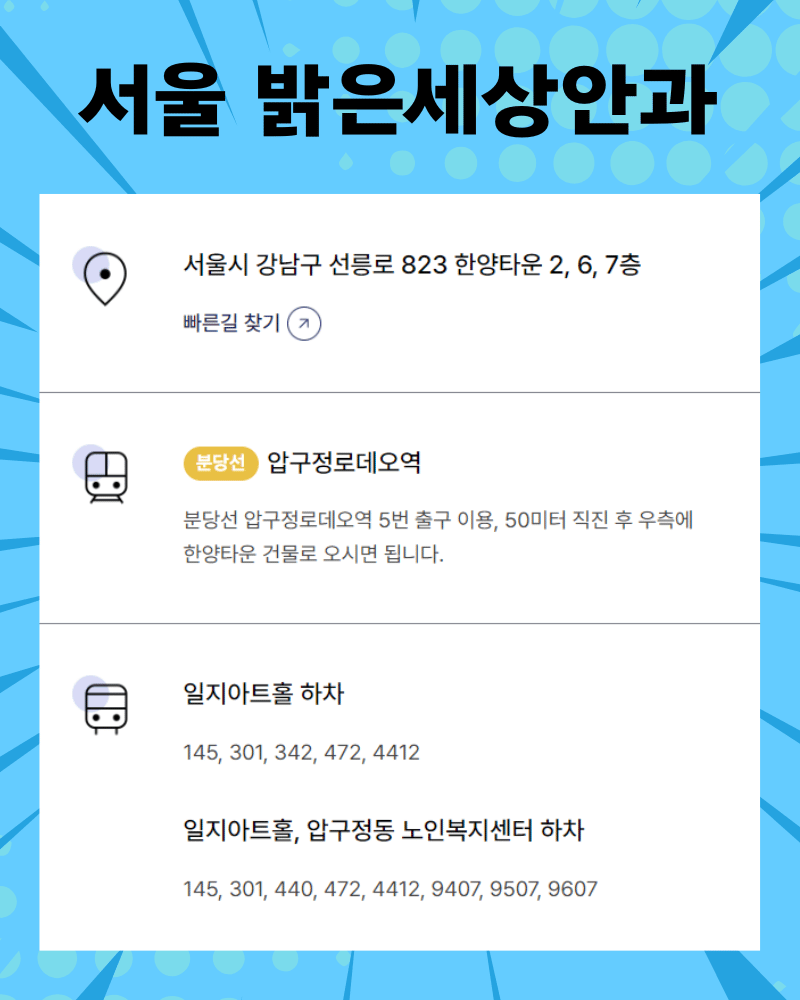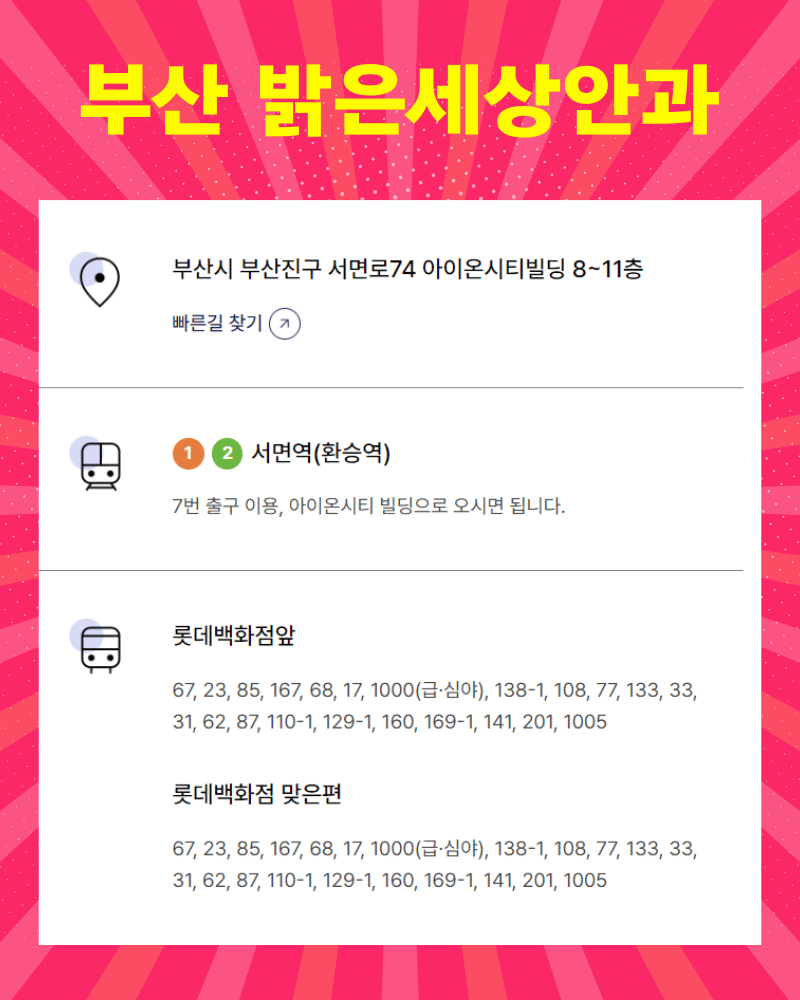
ICL Surgery Korea | BGSS Eye Clinic Seoul · Busan
Are you considering ICL surgery in Korea for high myopia or astigmatism?
BGSS Eye Clinic Seoul · Busan provides customized Implantable Collamer Lens (ICL) surgery based on detailed ocular structure analysis and long-term safety protocols.
ICL surgery is a lens-based vision correction procedure that does not remove corneal tissue, making it a strong alternative for patients who are not suitable candidates for laser surgery.
✓ What Is ICL Surgery?
ICL (Implantable Collamer Lens) surgery involves placing a biocompatible lens inside the eye to correct refractive errors.
✓ No corneal tissue removal
✓ Suitable for high myopia and high astigmatism
✓ Removable and replaceable if necessary
✓ High-definition visual quality
ICL is often recommended for:
- Patients with very high prescriptions
- Individuals with thin corneas
- Those not eligible for SMILE or LASIK
- Patients prioritizing long-term corneal preservation
✓ What Makes a Clinic Good for ICL Surgery in Korea?
ICL surgery is highly dependent on precise measurements and lens sizing accuracy.
✔ Advanced Ocular Diagnostics
- Anterior chamber depth (ACD) measurement
- Endothelial cell count analysis
- Axial length measurement
- Corneal curvature mapping
- Detailed retinal examination
✔ Precise Lens Sizing & Planning
- Individualized lens size calculation
- Toric ICL option for astigmatism
- Astigmatism axis alignment accuracy
- Vault prediction and safety assessment
✔ Structured Post-Operative Monitoring
- Intraocular pressure (IOP) monitoring
- Lens position verification
- Scheduled long-term follow-ups
At BGSS Eye Clinic, candidacy for ICL surgery is evaluated conservatively with safety as the primary priority.
✓ Seoul · Busan Network Advantage
- Standardized surgical protocols in both locations
- Follow-up care available in Seoul or Busan
- Integrated long-term monitoring system
Patients traveling within Korea can continue care seamlessly through our network system.
✓ Who Is a Good Candidate?
- High or extreme myopia
- High astigmatism
- Thin corneas unsuitable for laser surgery
- Patients seeking reversible vision correction
- Individuals prioritizing visual clarity and quality
A comprehensive examination is required before confirming eligibility.
✓ ICL Surgery Procedure Process
- Comprehensive diagnostic testing (approximately 2 hours)
- Lens sizing and refractive planning
- Surgeon consultation
- Surgery (approximately 10–15 minutes per eye)
- Next-day and scheduled follow-up visits
While the procedure itself is brief,
accurate pre-operative measurements are the most critical step.
✓ How Much Does ICL Surgery Cost in Korea?
The cost of ICL surgery in Korea may vary depending on:
- Degree of myopia and astigmatism
- Toric (astigmatism-correcting) lens selection
- Ocular structure measurements
- Diagnostic complexity
- Post-operative care program
Exact pricing is determined after a detailed eye examination.
BGSS Eye Clinic prioritizes transparency and personalized surgical planning.
✓ ICL Surgery Korea Checklist
Before choosing a clinic, confirm:
□ Is anterior chamber depth carefully measured?
□ Is endothelial cell count evaluated?
□ How is lens size determined?
□ Is toric axis alignment managed precisely?
□ Is long-term IOP and vault monitoring included?
Choosing a clinic for ICL surgery in Korea should focus on precision, safety, and long-term follow-up — not price alone.
Conclusion
If you are considering
ICL surgery in Korea,
BGSS Eye Clinic Seoul · Busan offers advanced diagnostics, individualized lens planning, and structured post-operative care.
ICL surgery is not simply a vision correction procedure —
it is a precision-based intraocular surgery that requires careful evaluation and planning.
A thorough consultation and examination will help determine whether ICL is the safest and most effective option for you.
Trusted Expertise Personalized Care | Widely Acclaimed
BGSS Board-certified Opthalmologists
Top LASIK Procedures Available in Seoul
Depending on your eye condition and preferences, Seoul clinics offer a variety of LASIK and vision correction treatments, including:
- Traditional LASIK – A well-established method using a laser to reshape the cornea for better vision.
- Femto-LASIK (Bladeless LASIK) – Uses a femtosecond laser for a more precise and gentle procedure.
- SMILE (Small Incision Lenticule Extraction) – A minimally invasive procedure with a faster recovery time.
- PRK (Photorefractive Keratectomy) – Ideal for patients with thin corneas or active lifestyles.
- ICL (Implantable Collamer Lens) – A great alternative for those who are not candidates for LASIK.